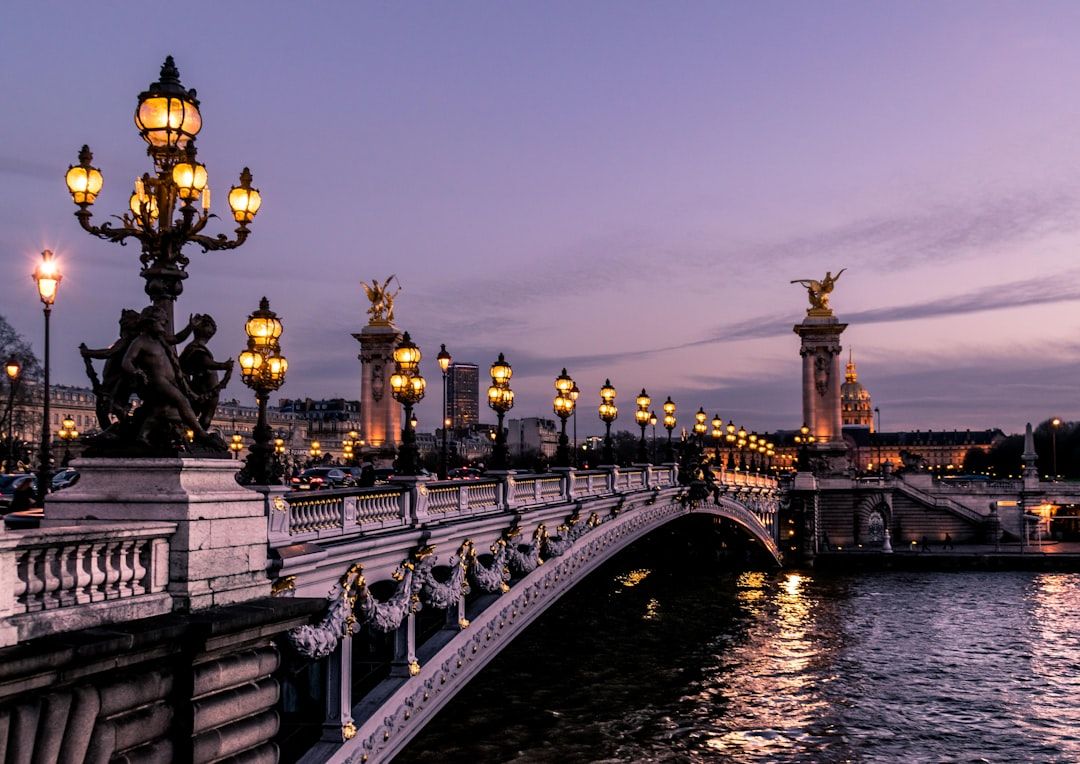
Paris has a second tier of sights that would headline almost any other city, and which are quiet because of what stands nearby.
The covered passages
Glass-roofed nineteenth-century arcades — around twenty survive from an original hundred and fifty.
Galerie Vivienne, the most beautiful, with mosaic floors.
Passage des Panoramas, the oldest, now full of small restaurants.
Passage Jouffroy and Passage Verdeau, connected across a street.
Free, mostly in the 2nd and 9th, and close enough together to walk in an afternoon.
Père Lachaise
Forty-four hectares of tombs and trees on a hillside, free to enter.
Oscar Wilde, Jim Morrison, Chopin, Édith Piaf, Balzac, and thousands of elaborate nineteenth-century monuments.
Take a map at the entrance. Finding specific graves without one is genuinely difficult — the paths are irregular and the numbering is not intuitive.
The Catacombs are the other Parisian death-tourism site: six million people's remains in former quarries. Timed entry, and the queue without a booking is long.
The small museums
Musée Jacquemart-André — a Haussmann-era mansion preserved with its collection intact, shown as the owners displayed it. Italian Renaissance, Rembrandt, Van Dyck. Small, calm, and among the most rewarding museums in the city.
Musée Rodin — the garden ticket costs a fraction of full admission, and the Thinker, the Gates of Hell and the Burghers of Calais are all outdoors. Most of the famous works, in a rose garden.
Musée de la Vie Romantique, with a garden café.
Musée Carnavalet — the history of Paris, free, in two Marais mansions.
Musée de Cluny — medieval art in a Roman bath complex, with the Lady and the Unicorn tapestries.
The city underneath and above
The Petite Ceinture — a disused railway that circled Paris, with sections now open as walkable green corridors.
The Promenade Plantée in the 12th, an elevated park on an old viaduct that predates New York's High Line and inspired it.
The Paris sewers museum, which is exactly what it sounds like and better than expected.
Neighbourhoods
Canal Saint-Martin — iron footbridges, locks, and the young Paris that sits along the water in the evening.
Belleville and Ménilmontant — the 20th, with street art, the best views over the city from Parc de Belleville, and none of the tourist infrastructure.
La Butte-aux-Cailles in the 13th, a village of low houses.
Rue Mouffetard and the market streets — Rue Montorgueil, Rue Daguerre, Rue Cler.
Just outside
Giverny, Monet's garden and water-lily pond, an hour by train and shuttle. Open roughly April to October.
Chantilly, a château with the second-best art collection in France after the Louvre and almost no queue.
Vaux-le-Vicomte, the château that inspired Versailles and receives a fraction of its visitors.
Saint-Denis basilica, where the French kings are buried, at the end of a metro line.